
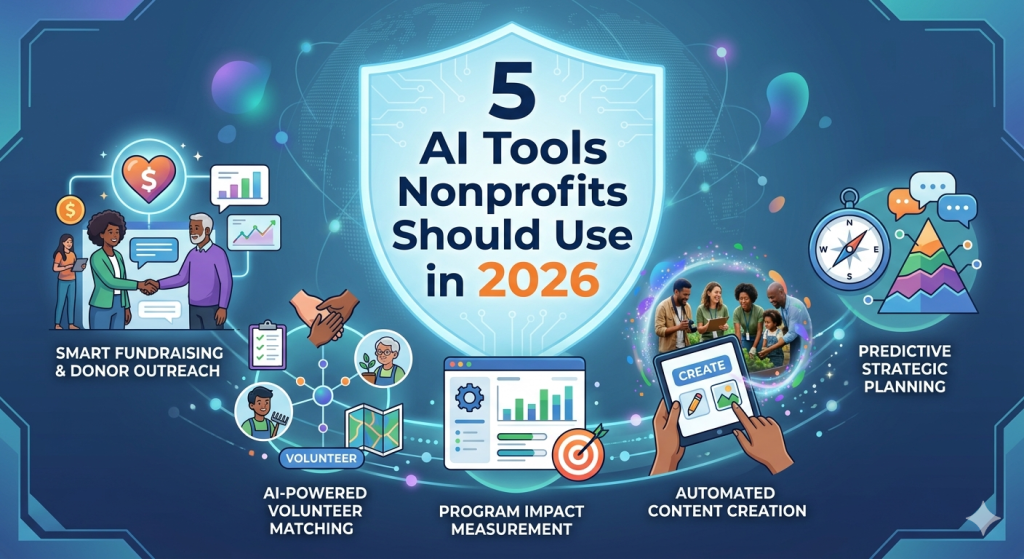
Running a nonprofit in 2026 means doing more with less and that pressure is real. Between managing donors, writing grants, engaging your community, and keeping your team aligned, the workload never stops. The good news? Artificial intelligence has quietly become one of the most powerful equalizers for mission-driven organizations. That is why I wrote this article on the 5 AI tools nonprofits should use.
You no longer need a large marketing budget or a dedicated tech team to compete with bigger organizations. AI tools are closing that gap fast. Whether you are a one-person operation or a mid-sized nonprofit managing multiple programs, these five tools can transform how you work, communicate, and grow.
Here are the five AI tools every nonprofit should seriously consider in 2026.
1. Microsoft Copilot — For Team Productivity and Administration
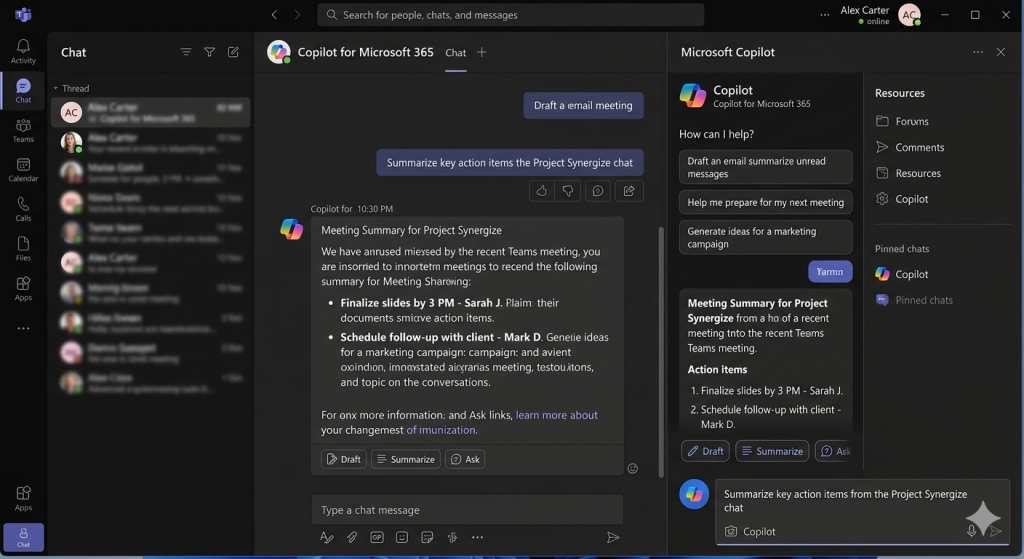
If your nonprofit already uses Microsoft 365 — Outlook, Word, Excel, or Teams — then Microsoft Copilot is arguably the most immediately useful AI tool you can add in 2026.
Copilot is embedded directly into the Microsoft 365 suite, meaning it works inside the tools your co-workers is already using every day. In Microsoft Teams, Copilot can summarize meeting transcripts, pull out action items, and catch up team members who missed a call all in seconds. In Word, it can help you draft program reports, board updates, and donor communications from a simple prompt. In Excel, it can analyze your fundraising data and surface trends without requiring any formula knowledge.
For nonprofits where staff often wear multiple hats, Copilot reduces the time spent on repetitive administrative tasks and frees up energy for mission-critical work. Think of it as an AI assistant embedded in your workflow rather than a separate tool you have to remember to open.
Best for: Nonprofits already using Microsoft 365 who want to work faster without changing their existing tech stack.
2. Grantable — For Grant Writing and Funding Research

Grant writing is one of the most time-intensive tasks any nonprofit faces, and it is also one of the areas where AI is making the biggest difference right now. Grantable is an AI-powered grant writing assistant built specifically for nonprofits.
Unlike general-purpose AI tools, Grantable is trained on nonprofit grant language and understands the structure funders expect. You can upload your organization’s background information once, and Grantable will use it to help you generate first drafts of grant responses, answer narrative questions, and tailor proposals to specific funders. It also has a database of grant opportunities you can search directly within the platform.
For smaller nonprofits that cannot afford a dedicated grant writer, this tool dramatically lowers the barrier to applying for more funding. For larger organizations, it accelerates the process so staff can focus on strategy and relationship-building with funders rather than staring at a blank page.
Best for: Development teams and executive directors who write multiple grants per year and want to increase output without burning out.
3. Canva AI — For Marketing and Digital Engagement
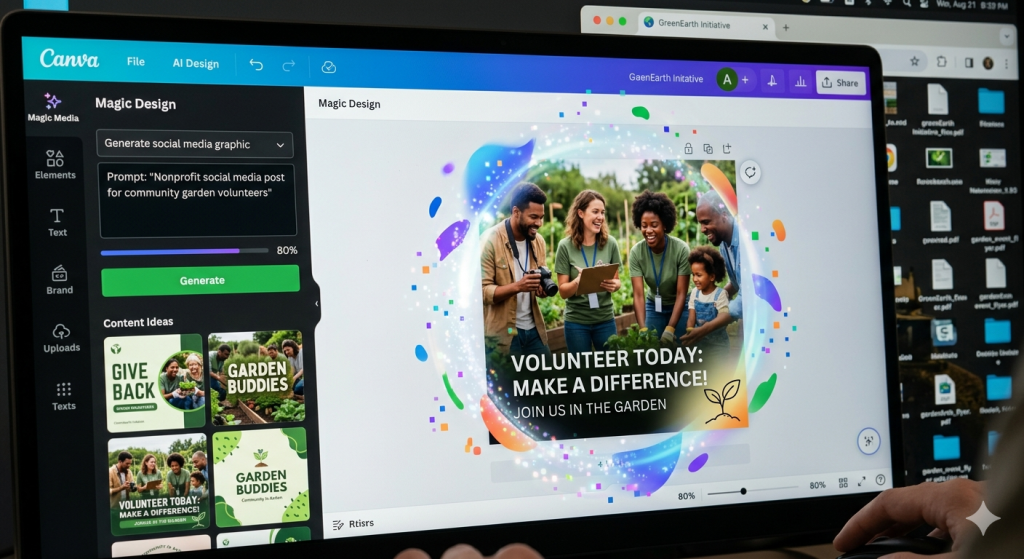
Visual content is no longer optional for nonprofits. Donors, volunteers, and community members expect to see professional, engaging content across social media, email, and your website. The challenge is that most nonprofits cannot afford a graphic designer on staff. That is exactly where Canva’s AI features come in.
Canva has evolved significantly in 2026, with AI tools baked into its platform at every level. Magic Write helps you generate captions, fundraising copy, and email subject lines. The AI image generator lets you create custom visuals for campaigns without needing stock photos. Magic Design can build out an entire branded social media post, presentation, or fundraising flyer from a single text prompt.
For nonprofits running campaigns around Giving Tuesday, year-end appeals, or community events, Canva AI means you can produce polished, on-brand content in a fraction of the time. The free plan is generous for small organizations, and the nonprofit discount through TechSoup makes the paid tier extremely accessible.
Best for: Nonprofits that need consistent, professional-looking marketing content across multiple channels without a design team.
4. Mailchimp with AI Features — For Donor Communication and Email Marketing
Donor retention is one of the biggest challenges nonprofits face, and consistent, personalized communication is the number one factor that keeps donors engaged. Mailchimp has long been the go-to email platform for nonprofits, and its AI-powered features in 2026 make it even more powerful.
Mailchimp’s AI tools now help you write email subject lines optimized for open rates, suggest the best send times based on your audience behavior, and generate full email drafts from a brief description of your campaign. The segmentation tools, powered by machine learning, help you identify which donors are most likely to give again, who might be at risk of lapsing, and how to personalize outreach to different groups in your list.
For nonprofits with email lists ranging from a few hundred to tens of thousands of contacts, Mailchimp’s AI features help you communicate smarter not just more often. The free plan covers up to 500 contacts, and the nonprofit rate through TechSoup significantly discounts paid tiers.
Best for: Nonprofits that rely on email as a primary communication channel with donors, volunteers, and community members.
5. ChatGPT (with Custom Instructions) — For Content Creation and Everyday Tasks
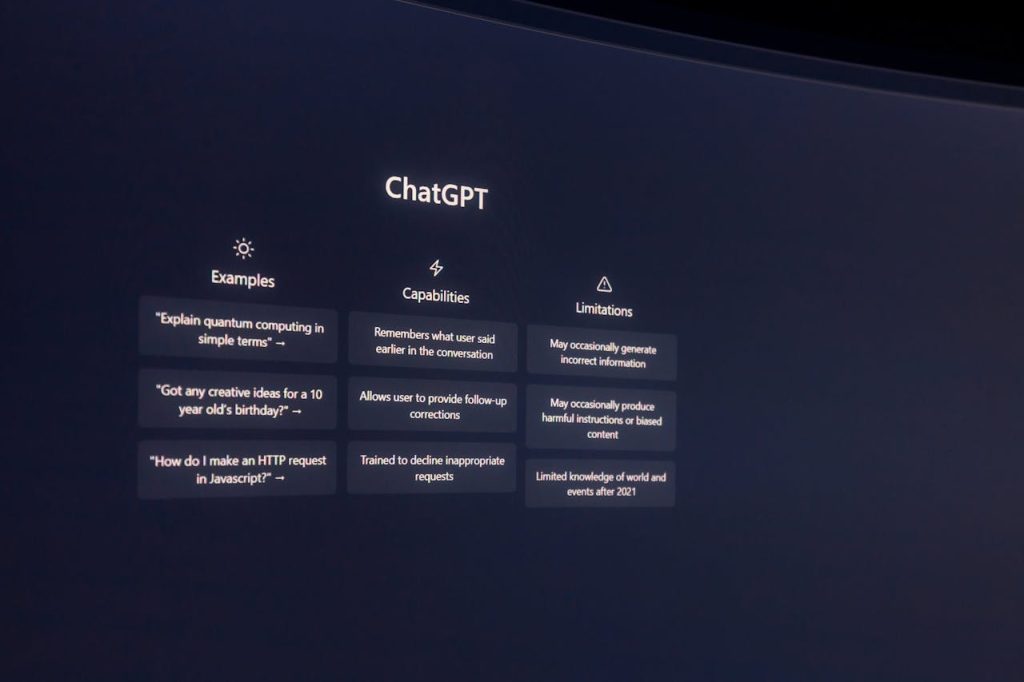
No AI tools list in 2026 would be complete without ChatGPT. While many of the tools above are specialized for specific nonprofit functions, ChatGPT is a versatile, everyday AI assistant that your entire team can use across a wide range of tasks.
Nonprofits are using ChatGPT to draft donor thank-you letters, write social media content, create volunteer onboarding materials, summarize board meeting notes, build FAQ documents, and even brainstorm new program ideas. With custom instructions, you can tell ChatGPT to always write in your organization’s tone of voice, reference your mission statement, and tailor output to your specific audience.
The free version of ChatGPT is robust enough for most basic use cases. ChatGPT Plus, at $20 per month, unlocks more advanced capabilities including document uploads, web browsing, and access to more powerful models — a worthwhile investment for any staff member who communicates frequently or creates a high volume of content.
The key to getting value from ChatGPT is learning how to prompt it well. The more context you give it about your organization and goals, the more useful and on-brand the output will be.
Best for: Any nonprofit staff member who writes, communicates, or creates content regularly — which is basically everyone.
Final Thoughts
AI is not replacing the humans behind your mission. It is giving them more time and capacity to focus on the work that actually moves the needle. The tools above are accessible, many are free or deeply discounted for nonprofits, and they are all being used right now by organizations like yours to raise more money, communicate better, and work more efficiently.
Start with one tool that addresses your biggest pain point today. Get comfortable with it, build it into your workflow, and then layer in the others. The nonprofits that adopt AI thoughtfully in 2026 will have a meaningful advantage in impact, reach, and sustainability.
Have questions about implementing any of these tools? Drop a comment below or reach out directly — I would love to hear how your organization is using AI.
Muss Sterrett is an IT Specialist with hands-on experience in cloud apps, enterprise technology, and AI-powered productivity tools. He writes about tech careers, emerging AI tools, and the intersection of technology and human performance. Follow along for weekly insights on https://www.musssterrett.com and connect on [LinkedIn].
Tags: AI tools, nonprofit technology, Microsoft Copilot, grant writing AI, nonprofit marketing, ChatGPT for nonprofits, tech for good